
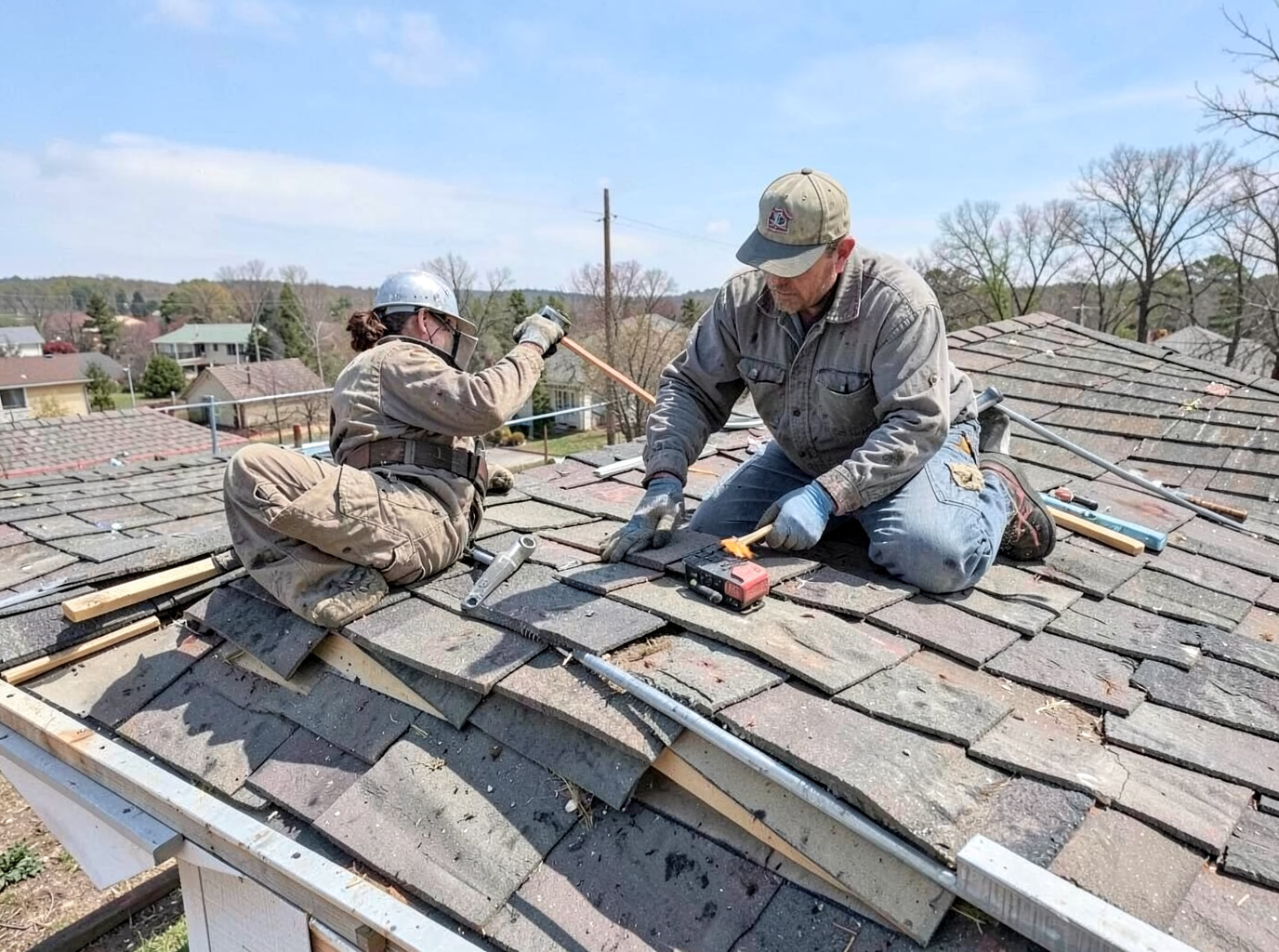
Billings homes in the Heights and North Park often carry original asphalt or wood shake roofs installed decades ago. Cold semi-arid winters bring repeated freeze-thaw cycles that crack older shingles and lift flashing around chimneys and valleys. Replacement crews must remove existing layers completely, inspect decking for rot from ice dam leaks, and install new ice-and-water shield along eaves plus synthetic underlayment rated for high wind. Access on sloped lots near the Rimrocks requires extra staging and tie-off points that add time compared with flat South Side properties.
Metal panel systems perform well in the warm summers and sudden hail events common in Yellowstone County. Homeowners near Moss Mansion or the Yellowstone Art Museum frequently choose standing-seam steel because it sheds snow quickly and resists the constant UV that degrades asphalt faster here than in Bozeman. Proper ventilation is critical; without ridge vents sized to the attic, trapped moisture from summer heat can blister new shingles within two seasons. Crews also check for knob-and-tube wiring in pre-1960 Downtown Billings homes before any tear-off begins.
Code in Yellowstone County requires 130 mph wind-rated fasteners and drip edge on all sides for replacement permits. Older West End bungalows with low-pitch roofs need extra step flashing at every wall intersection to prevent wind-driven rain from entering. After installation, crews leave magnet-swept yards and new ridge cap vents that match existing soffit intake so the system breathes through both cold winters and hot July afternoons.
Technician insight
In Billings, the thing that catches most people out with Roof Replacement is underestimating how quickly wind-driven snow packs under standard shingles on west-facing slopes near the Rimrocks. Homes in the Heights built before 1980 often lack the extra ice-and-water shield and ridge ventilation needed once temperatures swing from single digits to the 40s in a single January week.
1950s Bungalow in the Heights
Homeowner noticed ceiling stains after a March melt. Inspection showed two layers of original shingles with failed flashing at the chimney. Crew removed both layers, replaced rotted deck boards, added full ice-and-water shield, and installed architectural shingles with new ridge vent. The home now handles Yellowstone County winters without leaks.
Roof Replacement Services We Offer
✓Asphalt Shingle Roof Replacement
Full tear-off and installation of architectural shingles rated for Billings wind and freeze-thaw cycles on single-family homes in the Heights and West End.
✓Metal Panel Roof Replacement
Standing-seam steel or aluminum systems that shed snow load quickly and handle intense summer UV on properties near the Rimrocks.
✓Tile Roof Replacement
Removal of failing concrete or clay tile and installation of new tile with upgraded underlayment suited to Yellowstone County temperature swings.
✓Low-Slope Roof Replacement
Modified bitumen or TPO membrane systems for flat or low-pitch roofs on South Side commercial buildings and older Downtown Billings structures.
✓Ice Dam Prevention During Replacement
Installation of extended ice-and-water shield plus improved ventilation to stop winter leaks common on North Park and Heights homes.
Roof Replacement Cost in Billings, MT
| Service | Typical Range | What Affects It |
|---|---|---|
| Asphalt shingle replacement, typical 1,800-2,200 sq ft home | $7,500–$12,000 | Price rises with two-layer tear-off or steep pitch common near the Rimrocks. |
| Metal panel roof replacement | $11,000–$18,000 | Standing seam adds cost but lasts longer in Billings freeze-thaw cycles. |
| Low-slope membrane replacement | $6,000–$10,500 | TPO or modified bitumen on South Side commercial buildings. |
| Ice-and-water shield extension only | $1,200–$2,400 | Added during replacement on North Park homes with history of ice dams. |
Ranges are typical for Billings, MT and confirmed with an exact written quote before any work starts.
How it works
- 1
On-Site Assessment
Measure roof, note pitch, check for rot, and document existing ventilation while walking the property in neighborhoods such as the Heights or South Side.
- 2
Material And Permit Selection
Recommend shingles or metal panels rated for local wind loads, secure Yellowstone County permit, and schedule tear-off around weather windows.
- 3
Complete Tear-Off And Deck Repair
Remove all layers, replace damaged sheathing, and install new ice-and-water shield along eaves and valleys before underlayment goes down.
- 4
Installation And Ventilation Upgrade
Lay new roofing, add ridge vents sized to the home, seal all penetrations, and finish with matching flashing around chimneys and skylights.
- 5
Final Walk-Through And Cleanup
Magnet sweep the yard, test attic ventilation, and review maintenance points with the homeowner before leaving the site.
Pricing
Upfront written quotes after inspection; final price depends on roof size, pitch, layers, and access.