
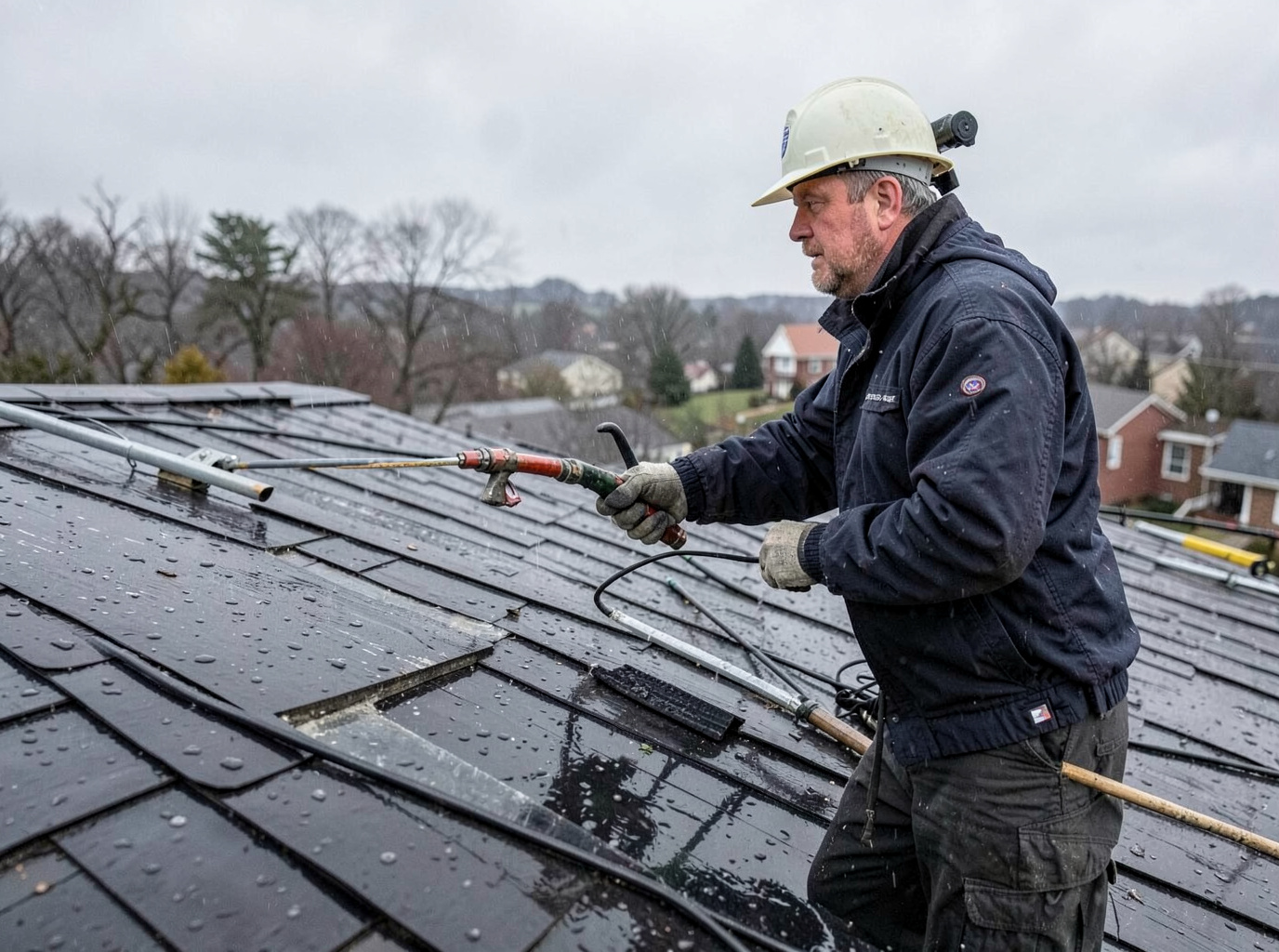
Huntley sits east of Billings along I-94 in Yellowstone County, a small community of mostly single-family homes on larger lots with mature trees and open exposure. Winters bring heavy snow loads and freeze-thaw cycles that crack asphalt shingles and ice-dam eaves, while summer hail and high winds off the plains tear at ridge vents and underlayment. As a Billings-based roofing contractor we know the access quirks here: narrow driveways, gravel approaches, and irrigation ditches that require careful staging so crews do not damage lawns or septic fields.
Many Huntley roofs date from the 1970s through 1990s and still carry original three-tab shingles over plywood decks that have seen decades of Montana sun. We routinely handle full tear-offs, ice-and-water shield upgrades along eaves, and ridge-vent replacements to handle the cold semi-arid climate. When a storm hits, we start at the east end of Main Street and work outward so homeowners on the same block can compare notes on timing and debris removal.
Service calls from Huntley usually involve checking for wind-driven rain under flashing at chimneys and skylights, a common leak point once temperatures drop below freezing. We keep the same crew and equipment that works the Heights and South Side so response times stay short even when roads ice over.
Around Huntley, MT
We regularly work near:
- 📍Huntley Elementary School
- 📍Main Street Huntley
- 📍Huntley Post Office
- 📍Yellowstone River access east of town
- 📍I-94 Exit 10 interchange
Roofing Contractor in Huntley, MT — Local Notes
- •Huntley lots often back onto irrigation ditches or the Yellowstone River, so crews must protect banks and avoid heavy equipment near saturated soil during spring runoff.
- •Older homes along Main Street and Pryor Road frequently have low-slope porch roofs that collect snow; these need extra ice-and-water membrane and sometimes metal panels to stop leaks.
- •Wind funnels between houses and open fields, so we add extra fasteners on the north and west exposures where most damage occurs.
- •Gravel driveways and septic systems limit where dumpsters can sit, requiring smaller loads and more hand-carrying of tear-off debris.